Most homeowners never expect water damage to start quietly. They imagine burst pipes or roof leaks that make an obvious mess. Moisture intrusion usually begins slowly and out of sight. A tiny opening around a window, a hairline foundation crack, or a small plumbing drip can introduce enough water to cause long term damage. By the time the issue becomes visible, repairs can be extensive.
At First Choice Inspectors, we frequently find moisture problems that homeowners did not know existed. Many of these issues showed warning signs long before serious damage occurred. Knowing what to look for can help you act early and protect your home.
Why Homes in Chicagoland Are Prone to Moisture Problems
Chicago’s climate puts constant pressure on residential structures. Heavy rainstorms, melting snow, humid summers, and repeated freeze thaw cycles all challenge a home’s exterior defenses. Water naturally seeks any available path inside. Older masonry, aging roofing materials, and original windows are common entry points. Even newer homes can develop moisture issues when drainage, ventilation, or exterior sealing is not performing as intended.
Once moisture finds a way in, it can travel through walls, ceilings, and flooring without leaving obvious clues right away.
Wall and Ceiling Stains Are Early Alerts
Discoloration is one of the clearest visual warnings. Yellow or brown patches on drywall, dark rings on ceilings, or streaks near windows often indicate water intrusion. Some homeowners repaint these areas without investigating the cause. That only hides the problem temporarily.
Paint which bubbles, peels, or feels soft to the touch is another indicator. Drywall that has absorbed moisture loses strength and can become a breeding ground for mold if not addressed.
Persistent Musty Smells Should Not Be Ignored
A damp or earthy smell is often the first sign of hidden moisture. Basements, laundry rooms, bathrooms, and closets tend to hold moisture longer due to limited airflow. If a room smells musty even after cleaning, water is likely present where you cannot see it.
Odors typically appear before visible mold growth. Treating the smell without locating the moisture source allows the problem to continue quietly.
Warped or Swollen Wood Signals Trouble
Wood trim, flooring, and cabinetry respond quickly to moisture. When water is present, these materials may swell, separate, or warp. Baseboards pulling away from walls or doors that suddenly stick can point to water exposure nearby.
Soft wood is especially concerning. Pressing lightly on trim or flooring near exterior walls, plumbing fixtures, or basement areas can reveal hidden moisture damage.
Efflorescence on Basement Walls Means Water Is Moving
White powdery residue on concrete or brick basement walls is known as efflorescence. It forms when water passes through masonry and leaves mineral deposits on the surface. Some homeowners wipe it away without realizing it confirms active moisture penetration.
While efflorescence itself is not harmful, it indicates that water is traveling through foundation materials. Over time this can weaken structural components and create favorable conditions for mold.
Excessive Condensation Is Another Warning
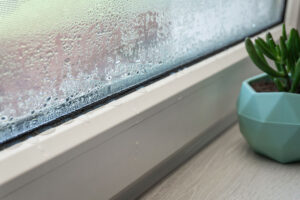
Some window condensation in winter is normal. However, heavy or constant moisture on windows, pipes, or HVAC ducts may signal high indoor humidity or ventilation problems. Left unchecked, this moisture can damage surrounding materials and feed mold growth.
Bathrooms without proper exhaust fans and tightly sealed homes with poor airflow are frequent sources of indoor moisture buildup.
Small Cracks and Failing Seals Let Water In
Cracked caulk around windows and doors, missing roof flashing, and small foundation cracks often allow slow water entry. These openings may look harmless but can introduce moisture over time. Exterior grading that slopes toward the house can also direct water straight to the foundation.
Addressing these minor defects early can prevent much larger repair projects later.
How Professional Inspections Detect Hidden Moisture
Many moisture problems are invisible during everyday living. Professional inspectors use moisture meters and thermal imaging to locate damp areas behind walls, ceilings, and flooring. Thermal imaging reveals temperature differences caused by moisture retention, allowing issues to be found before they surface.
At First Choice Inspectors, we include advanced tools in our inspections to help identify water intrusion early. Our detailed reports explain where moisture is present, possible sources, and recommended next steps.
Simple Steps to Reduce Moisture Risks
Keeping gutters clean and directing downspouts away from the foundation helps prevent basement seepage. Sealing exterior gaps, maintaining roof flashing, and repairing damaged siding reduces entry points. Inside the home, using exhaust fans and dehumidifiers helps control indoor humidity levels.
Regular inspections provide peace of mind and ensure small problems do not quietly grow into costly repairs.
Pay Attention to the Subtle Clues
Moisture intrusion rarely starts with dramatic damage. It begins with faint stains, quiet odors, slight warping, or chalky residue. Recognizing these early signs gives homeowners the opportunity to act before mold, rot, or structural deterioration sets in.
If you suspect moisture concerns or want a thorough evaluation, First Choice Inspectors is ready to help. Our experienced team serves homeowners throughout the Chicagoland area with professional inspections, mold assessments, and thermal imaging services that protect your home and your investment. Contact First Choice Inspectors at 773-429-9711 today or visit us online for more information!